

Rethinking Urban Traffic : What Kota’s Signal-Free Success Teaches Edmonton and Calgary
Share Now:
Urban congestion is more than just a daily annoyance
It’s a drag on quality of life, environmental sustainability, and economic productivity. Recently, Kota, a city in Rajasthan, India, made headlines by becoming the country’s first city to operate entirely without traffic lights.
This bold move is especially striking when you consider that Kota is densely populated and bustling with vehicles, yet its redesign has allowed for continuous, signal-free traffic.


Shruti Gupta
Data Analyst
How Kota Did It: Smart Design Over Signals
Kota’s transformation was not about removing control — it was about reimagining infrastructure:
The Urban Improvement Trust (UIT) led the initiative, building a system of ring roads to let traffic bypass congested inner routes.
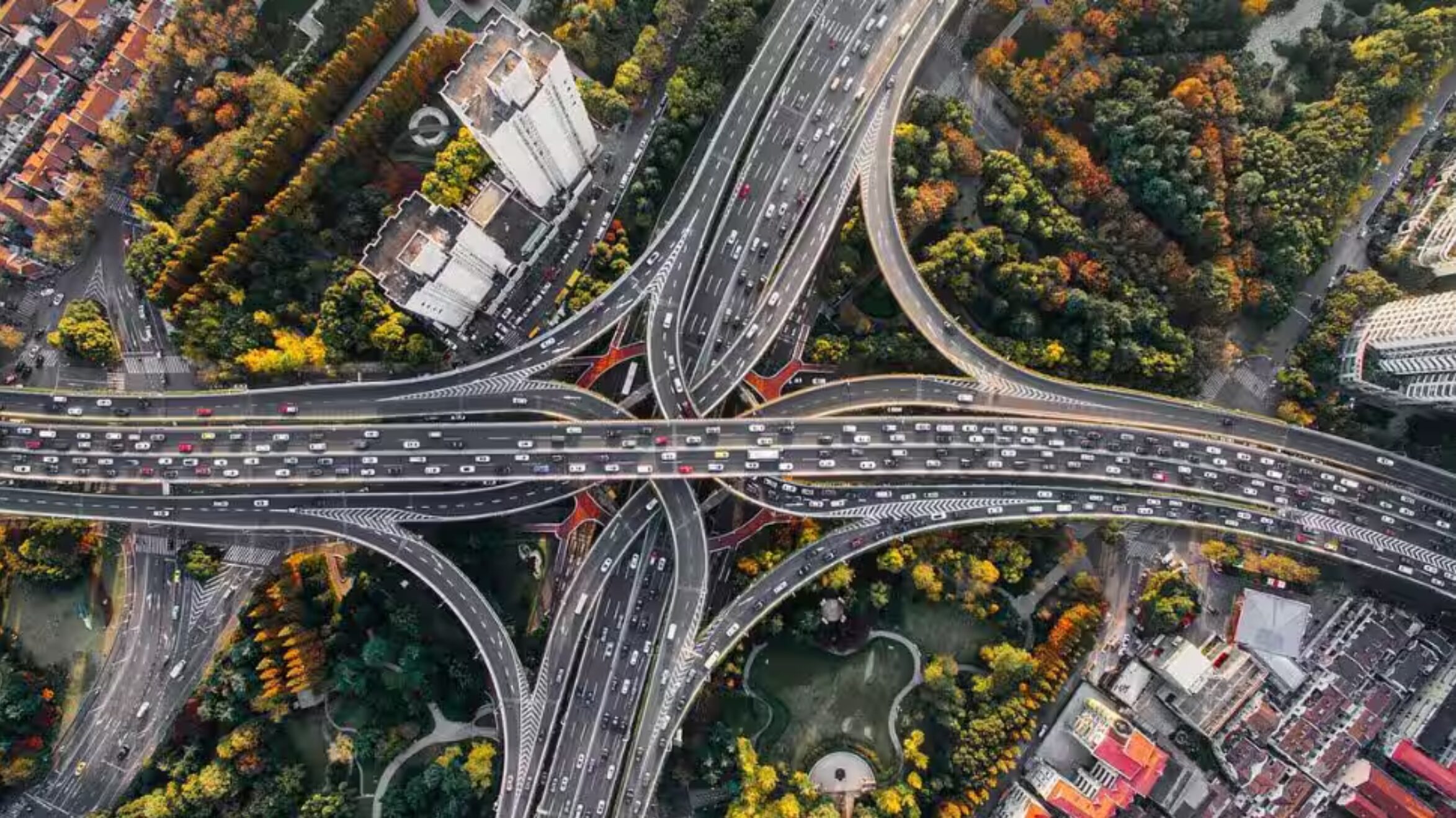
Iconic engineering solutions like flyovers, underpasses, and roundabouts replaced traffic lights at major junctions.
Intersections were redesigned to avoid conflict points, guiding vehicles smoothly through without the need for stops.
Signage, road markings, and traffic discipline (enforced by both road design and occasional personnel) help maintain order.
Because vehicles don’t idle at red lights, the city hopes to reduce fuel use, lower emissions, and improve the commuter experience.
Comparison: Kota vs. Edmonton and Calgary
Here’s something to really ponder: Kota’s population density and traffic pressures rival, or even exceed, those in many large North American cities, yet Kota has pulled off what many would see as impossible.
Edmonton — as of recent counts — has over 1.2 million people in
the city.
Alberta Regional Dashboard
Calgary is similarly large, with a metro population that also crosses the million mark.

World Population Review
Despite their size, Edmonton and Calgary still rely heavily on traffic signals — not just for control, but because of legacy infrastructure and traditional urban design.
Why Kota’s Model Matters
Smart urban mobility is possible — without over-reliance on signals.
Kota shows that with thoughtful planning, you don’t always need red-green-amber lights to manage highly trafficked intersections.
Well-designed infrastructure brings broader benefits.
By minimizing stops, traffic flow becomes smoother, travel times shorten, and emissions can drop. It’s a more sustainable model.
Kota’s success isn’t just built on flyovers; it’s also supported by a driving culture that respects road design, signage, and rules.
Bigger cities can learn from smaller successes.
Even densely populated cities like Edmonton and Calgary might benefit from rethinking their intersection designs, especially in hightraffic zones. Could roundabouts, grade separations, or corridor redesigns reduce the signal burden?
Challenges & Considerations for Edmonton and Calgary
- Urban Legacy: Unlike Kota, our cities are already built. Retrofitting roundabouts, overpasses, or underpasses is complex and expensive
- Space and Cost: Land acquisition and construction costs in North America can be much higher than in many Indian cities.
- Behavioral Change: Drivers, pedestrians, and traffic authorities would need to adjust. It’s not just a technical exercise — it’s a cultural one.
- Regulation & Safety: Signal-free designs need to ensure safety, especially for pedestrians and cyclists. Kota’s success relied partly on strict road discipline and signage.

A Call to Action
For civic leaders, urban planners, and policymakers in Edmonton, Calgary, and other growing cities: Kota’s achievement is more than a curiosity — it’s a proof of concept. It compels us to ask:
What would it take to pilot signal-free corridors or intersections in our cities?
Can we apply design over signal — especially in rapidly growing suburban areas or newly developed zones?
Could such a change not only ease congestion, but make our urban environments greener, safer, and more predictable?
If Kota can rethink its entire signal infrastructure for a population comparable to ours, surely we can explore smarter, more human-centered mobility solutions here too